characters
Broken Webtoon? (horang’s Nightmare
toonrecap Staff · 2026-11-21 · 4 min read
Diperbarui: 2026-11-21
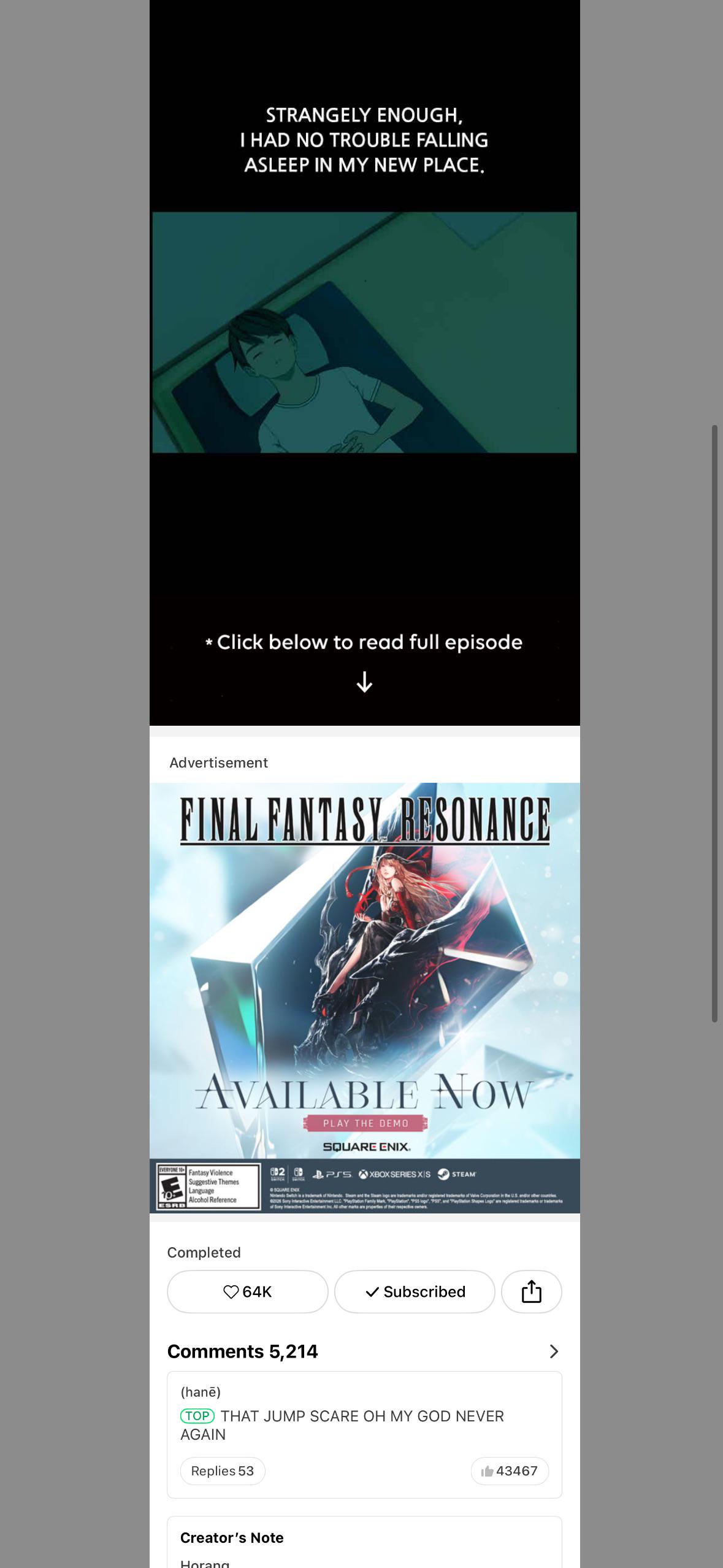
Foto: © reddit.com
Daftar Isi
- The Title as a Portal
- Dissecting the Question Mark
- The Whisper of a Nightmare
- Horang in the Shadows
- When a Webtoon Fractures
- Audience Echoes
- The Unfinished Canvas
Broken Webtoon? (horang's Nightmare). A title that flickers like a faulty screen, and a perfect starting point for any webtoon-explained deep dive into how a few words can build a whole mystery.
The Title as a Portal
The two-word phrase "Broken Webtoon" opens a doorway into an imagined realm where digital comics lose their shape. The question mark adds a tremor, suggesting uncertainty, a hesitation that invites the reader to wonder whether the fracture is real or imagined. Parentheses enclose "horang's Nightmare," a personal possession that deepens the mystery. The whole construction feels like a portal, a tiny gate that hints at a larger story hidden behind punctuation. By arranging these elements, the title itself becomes a miniature narrative, a compact scene that teases conflict without revealing detail. Anyone who enjoys webtoon-explained analysis will recognize this move, because the best titles in the genre promise a story before the first panel loads. It invites curiosity, urging the audience to step inside and search for meaning.
Dissecting the Question Mark
A question mark placed after "Broken Webtoon" is a deliberate punctuation choice. It turns a statement into a query, a prompt that refuses to settle. The symbol implies that something is amiss, that the status of the webcomic is doubtful. It also suggests that the answer is not yet known, encouraging speculation. In this context the question mark acts as a mirror, reflecting the uncertainty that often accompanies creative projects that encounter obstacles. It creates a pause, a moment for the reader to consider possibilities before moving forward.
The Whisper of a Nightmare
The word "Nightmare" carries weight, conjuring images of darkness and disruption. When attached to a name, it becomes a personal burden, a haunting that belongs to an individual. The coupling of "Nightmare" with "horang" implies that the distress is not abstract but intimately tied to a specific figure. The phrase suggests a scenario in which the nightmare is tied to the creative process, perhaps an internal struggle manifested through the broken state of the comic. The darkness of a nightmare contrasts with the bright, colorful world that webtoons typically inhabit, highlighting a clash between expectation and reality.
Horang in the Shadows
The name "horang" appears within parentheses, a subtle isolation that separates it from the surrounding text. By placing it in brackets, the title gives the name a protective, almost secretive frame. It hints that "horang" is the owner of the nightmare, the one who experiences the disturbance first-hand. The isolation also suggests that the individual may be hidden from view, a figure working behind the scenes. The framing invites speculation about the role of the person, whether they are creator, protagonist, or a silent observer. The name itself becomes a focal point, a quiet anchor in a sea of uncertainty.
When a Webtoon Fractures
The notion of a "broken" digital comic evokes images of corrupted files, disrupted panels, or narratives that lose coherence. A fracture in a webtoon can be technical, artistic, or emotional, each possibility echoing a different kind of breakage. The word "broken" carries the sense of something that once functioned smoothly but now stumbles. It can refer to a loss of continuity, a glitch that prevents the story from flowing. In webtoon-explained discussions, readers often point out that a break in the format, such as a missing episode or a scrambled panel order, can feel as dramatic as any plot twist. The idea that a comic could break mirrors how creative works can falter when circumstances shift, when inspiration wanes, or when external pressures interfere.
Audience Echoes
A title that asks a question and names a nightmare automatically pulls an audience into a dialogue. Readers become participants, their minds filling the gaps left by the sparse wording. The combination of uncertainty and personal distress invites empathy, prompting fans to wonder how the broken state affects the experience of the story. Comment sections turn into mini theory boards, and webtoon-explained threads quickly fill with guesses about what horang is hiding. The audience may imagine themselves as witnesses to a collapse, as if watching a beloved series stumble. Their reactions become part of the narrative, an invisible chorus that responds to the implied crisis.
The Unfinished Canvas
Because the title offers no resolution, it stands as an unfinished canvas waiting for color. The lack of explicit detail leaves space for imagination to paint scenes, emotions, and outcomes. The open-ended nature of the phrasing serves as a blank page, a place where readers can project their own hopes and fears. By ending with a parenthetical nightmare, the title suggests that the story remains hidden, waiting to be revealed or perhaps never fully resolved. That is exactly why a webtoon-explained reading of this title never feels finished, since every new angle opens another door. This lingering ambiguity turns the title itself into a work of art, a compact piece that thrives on the tension between what is shown and what remains concealed.
, Ruang iklan (terpisah dari konten) ,