 InícioFinal explicadoPersonagensArte e painéisEquipeSobre nósInícioFinal explicadoPersonagensArte e painéisEquipeSobre nós
(belum ada terjemahan pt, tampil English)
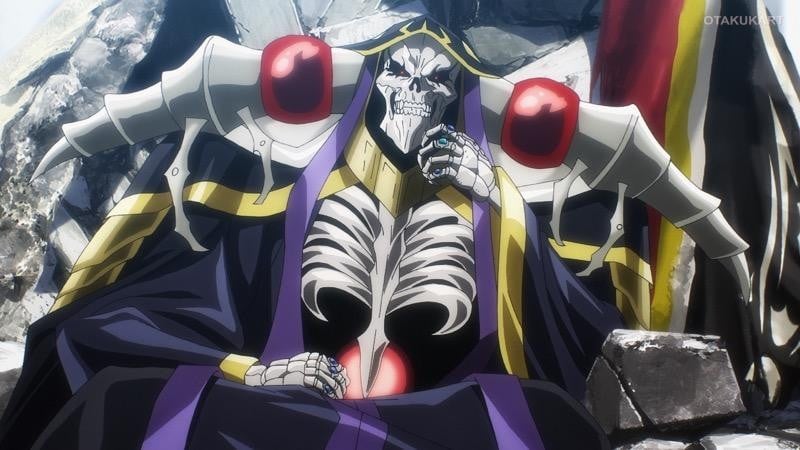
The undead sorcerer sits on a throne of bones, eyes glowing with a power that few can imagine. Yet the man behind that voice admits the hardest part is simply acting like a deity.
Chris Guerrero is the English voice actor who gives life to Ainz Ooal Gown, the skeletal overlord who rules the New World in the popular series Overlord. In a recent conversation with the fan‑focused outlet Mama’s Geeky, Guerrero opened up about what it means to inhabit a character who is both a feared ruler and a self‑conscious former gamer. The interview was part of Crunchyroll’s “Release the Villains” campaign, a project that shines a spotlight on the darker figures of anime and the actors who portray them. Guerrero’s remarks offered a rare glimpse into the mental gymnastics required to keep Ainz’s godlike façade intact.
The actor describes Ainz as a character caught between two worlds. On one side lies the reality of a player who spent countless hours gaming, someone who knows the mechanics of power and the limits of a virtual avatar. On the other side stands a universe that treats him as an all‑powerful deity, a being whose very presence reshapes nations. Guerrero points out that Ainz must constantly remind himself that his authority is built on perception rather than genuine divinity. The former gamer inside him worries about losing the thread that connects his past life to his current rule. This internal conflict becomes the engine that drives Ainz’s decisions throughout the series.
Ainz’s enemies fear him, and his subjects treat him as an almost unstoppable ruler. The world of Overlord watches every move, interpreting each gesture as a sign of divine will. Guerrero explains that the character’s biggest challenge is maintaining the illusion of godhood while secretly grappling with doubts. The actor notes that Ainz’s struggle is not just about external threats; it is also about staying true to a self‑image that was never truly his. The constant performance required to keep up appearances adds a layer of psychological tension that the voice actor finds compelling to explore.
The interview was conducted as part of Crunchyroll’s “Release the Villains” initiative, a campaign that aims to present villains from a fresh perspective. By inviting voice actors like Guerrero to discuss their roles, the series hopes to deepen fans’ understanding of the motivations that drive antagonists. In the same interview series, Jason Liebrecht, the English voice of Zeke Jaeger from Attack on Titan, defended his character against common misinterpretations, describing Zeke as a “false antagonist” whose backstory clarifies his actions. The inclusion of multiple actors underscores the campaign’s broader goal: to humanize figures traditionally labeled as evil.
While Guerrero focuses on the paradox of Ainz’s godlike status, Liebrecht’s comments about Zeke illustrate a similar theme of misunderstood intentions. Both actors emphasize that villains often carry hidden layers that are revealed only through deeper narrative context. This shared sentiment highlights a trend in contemporary anime storytelling, where antagonists are crafted with complex psychologies rather than simple malice. The “Release the Villains” campaign leverages these insights to challenge the audience’s preconceived notions, encouraging a more nuanced engagement with the material.
Listeners of the English dub notice the subtle shifts in Guerrero’s performance that reflect Ainz’s internal conflict. When Ainz addresses his subordinates, the tone carries an authority that borders on reverence, yet a faint undercurrent of uncertainty can be heard in quieter moments. Fans have praised the actor’s ability to balance the character’s overwhelming presence with the vulnerability of a man who once logged hours in a virtual world. The authenticity of that balance is a direct result of Guerrero’s willingness to explore the psychological weight of pretending to be a god.
As Overlord continues to expand its narrative, the challenges faced by Ainz are expected to deepen. Guerrero’s insights suggest that future seasons will likely push the character further into the realm of existential doubt, testing how long an illusion can survive when it is built on a foundation of role‑playing experience. The “Release the Villains” campaign will keep providing platforms for actors to discuss these evolving dynamics, offering fans a behind‑the‑scenes look at the craft of villainous storytelling. For now, the voice behind the skeletal king remains committed to portraying a ruler who must constantly convince both his subjects and himself that he truly is a god.